Starting From 49Rs/Pcs
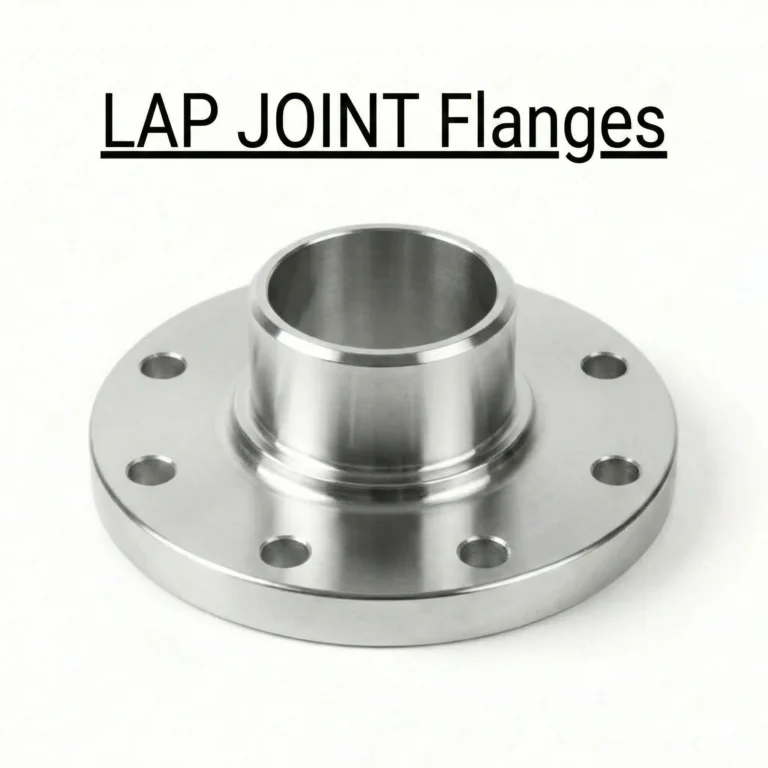
| Product Name | LJF Flange |
| Product Full Name | Lap Joint Flange (Backing Flange) |
| Metal Name | Stainless Steel |
| Metal Grade | SS 316 / SS 316L |
| Country of Origin | India |
| Size Range | 1/2" NB to 24" NB (Larger Sizes on Request) |
| Pressure Class | 150#, 300#, 600# (Typically Low to Medium Pressure) |
| Delivery | All Over India and Export to All Over World |
| Standard | ASTM A182 / ASME SA182 |
Easy Bolt Hole Alignment: The flange rotates freely around the stub end, allowing for instant bolt hole alignment with the mating flange without rotating the pipe itself.
Simplified Maintenance: Because the flange is not welded to the pipe, the connection can be easily dismantled for frequent inspection, cleaning, or replacement of gasket seals.
Cost-Effective Assembly: In many setups, only the stub end needs to be high-grade alloy (wetted part); the backing flange does not contact the fluid, though using SS 316 ensures external corrosion resistance.
| What is the difference between a Lap Joint and a Slip-On flange? | A Lap Joint flange is used with a stub end and is not welded to the pipe, whereas a Slip-On flange is welded directly to the pipe (fillet weld). |
| Do you supply the stub ends along with the SS 316 Lap Joint Flanges? | Yes, as a complete SS 316 Lap Joint Flanges Supplier in Mumbai, we can supply both the backing flange and the matching stub ends. |
| What is the main advantage of using SS 316 for this flange? | SS 316 contains molybdenum, which provides superior resistance to pitting and crevice corrosion in chloride-rich environments compared to SS 304. |
| Can the flange rotate after installation? | The flange can rotate around the stub end before the bolts are tightened, which solves misalignment issues during the fit-up process. |
| What pressure ratings are suitable for Lap Joint Flanges? | They are typically used in lower pressure classes, such as 150# and 300#, but we can manufacture them for higher ratings if specified. |
| Are you an SS 316 Lap Joint Flanges Manufacturer in India accepting custom orders? | Yes, we manufacture standard ANSI dimensions and can also fabricate custom sizes based on specific client drawings. |
| Do you provide material certificates with the flanges? | Absolutely. All orders are accompanied by Mill Test Certificates (MTC) per EN 10204 3.1 to guarantee material authenticity. |
| Is this flange suitable for corrosive fluid lines? | Yes, provided the stub end (which touches the fluid) is made of a compatible corrosion-resistant material like SS 316. |